- English
- French
- German
- Portuguese
- Spanish
- Russian
- Japanese
- Korean
- Arabic
- Irish
- Greek
- Turkish
- Italian
- Danish
- Romanian
- Indonesian
- Czech
- Afrikaans
- Swedish
- Polish
- Basque
- Catalan
- Esperanto
- Hindi
- Lao
- Albanian
- Amharic
- Armenian
- Azerbaijani
- Belarusian
- Bengali
- Bosnian
- Bulgarian
- Cebuano
- Chichewa
- Corsican
- Croatian
- Dutch
- Estonian
- Filipino
- Finnish
- Frisian
- Galician
- Georgian
- Gujarati
- Haitian
- Hausa
- Hawaiian
- Hebrew
- Hmong
- Hungarian
- Icelandic
- Igbo
- Javanese
- Kannada
- Kazakh
- Khmer
- Kurdish
- Kyrgyz
- Latin
- Latvian
- Lithuanian
- Luxembou..
- Macedonian
- Malagasy
- Malay
- Malayalam
- Maltese
- Maori
- Marathi
- Mongolian
- Burmese
- Nepali
- Norwegian
- Pashto
- Persian
- Punjabi
- Serbian
- Sesotho
- Sinhala
- Slovak
- Slovenian
- Somali
- Samoan
- Scots Gaelic
- Shona
- Sindhi
- Sundanese
- Swahili
- Tajik
- Tamil
- Telugu
- Thai
- Ukrainian
- Urdu
- Uzbek
- Vietnamese
- Welsh
- Xhosa
- Yiddish
- Yoruba
- Zulu
When it comes to your supplement line, choosing the suitable apple cider vinegar fruit powder is a choice that requires more strategic thinking than it may seem at first glance. Directors of research and development and procurement teams want criteria that are not only clear but also technical so that they may make confident decisions in sourcing situations. Because there are dozens of different suppliers and a variety of specifications available on the market, here is the explanation. In order to ensure that you are able to select the appropriate ingredient partner without having to second-guess your supply chain, this guide will walk you through everything that is significant. From gaining an understanding of what apple cider vinegar powder actually is to analysing acidity specifications, certifications, and the overall trustworthiness of the supplier, this guide will cover everything that is important.
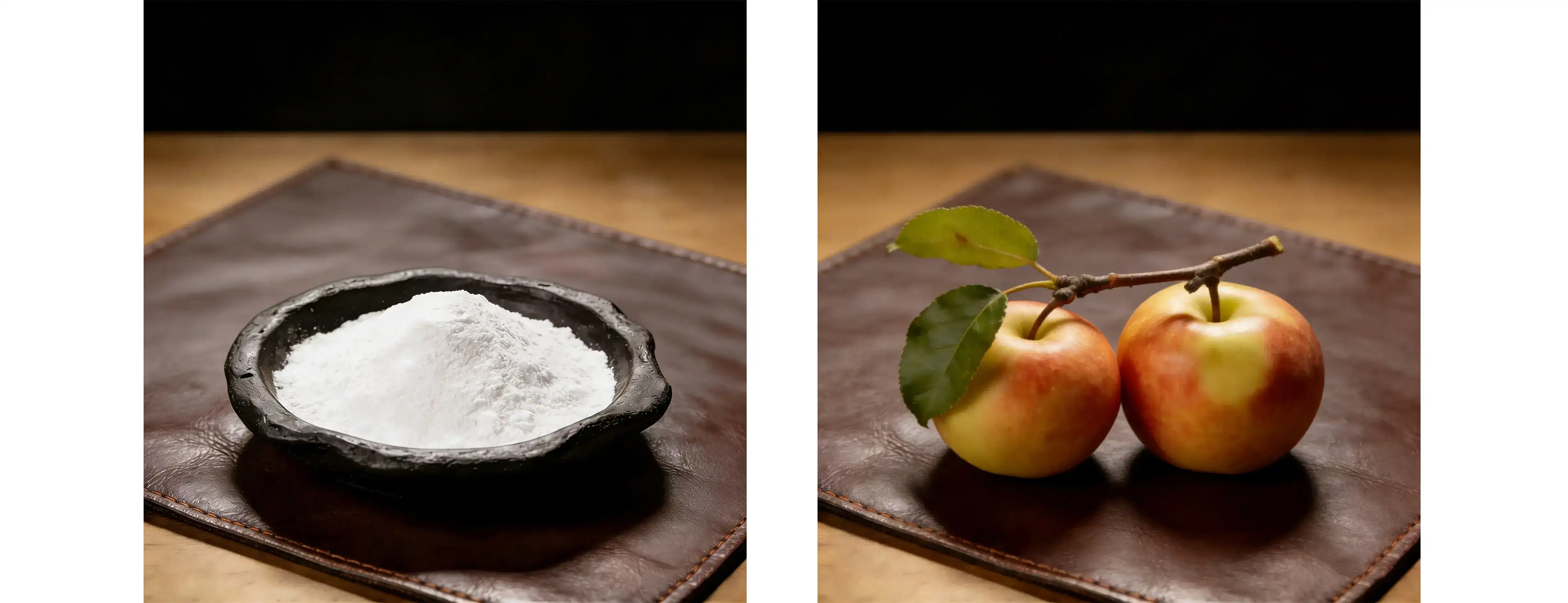
Understanding Apple Cider Vinegar Fruit Powder
Spray-drying apple juice that has been fermented from the apple's fruit is the procedure that is utilised in order to generate apple cider vinegar fruit powder, which is known by its Latin name, Pyrus malus. This powder is produced on the basis of the fermentation of apple juice. In order to concentrate the bioactive profile, which is mostly composed of acetic acid and malic acid, a carrier matrix is used once the water phase has been completely eliminated by the processes involved in the operation. In the end, the result is a powder that is brownish-yellow in colour, has a smooth flow, and has all of the advantageous properties that are connected with liquid apple cider vinegar without any of the manufacturing challenges that are involved with it.
Why Powder Outperforms Liquid in Supplement Manufacturing
It is a matter for worry due to the fact that liquid apple cider vinegar, which is mostly composed of water, causes a number of problems, including the deterioration of capsule shells, the mucking up of the structures of gummy gels, and the increase in the difficulty of shipping. None of the aforementioned will take place while the powder is in powder form. You are provided with a choice that can be stored for a substantial period of time, and it provides accurate readings of the corresponding dosage. It may be easily incorporated into gummies, capsules, tablets, and dry drink mixes, all of which are effective in their respective applications. To give you an example, a normal powder that has a total acidity of 10% would always offer you 100 mg of active acids per gram. On the other hand, batches of liquid vinegar would never be able to accomplish the appropriate outcome.
Key Nutritional Attributes
The organic acid content of apple cider vinegar powder is the source of the powder's bioactive properties, which are obtained from the powder's composition. The activity of the element's metabolism is driven by acetic acid, while malic acid adds to the element's potential to possess antioxidant qualities. Both of these acids are considered compounds. The enzyme structures and microbial components of the "Mother" are kept in an inactive state throughout the whole of the production process, which includes drying at a low temperature. In the digestive system, when they are exposed to moisture, they are able to restore their actively functioning condition. There is a substantial gap between low-cost maltodextrin fillers that are labelled as apple cider vinegar extract and high-quality products. A big disparity exists between the two.
Core Criteria to Consider When Choosing ACV Fruit Powder
There are different kinds of apple cider vinegar fruit powder. The following technical factors should be at the top of your list when looking at ingredients for supplement formulas.
The following is a list of the primary criteria that every procurement team ought to utilise in order to evaluate bids:
- Looking for standardised tests of 5% or 10% total acids (measured by titration or HPLC) is the first step in determining the total acidity specification. For applications that are sensitive to palatability and food-grade, a specification of 5% is appropriate; however, a specification of 10% is suggested for encapsulated supplements that need a greater bioactive concentration per capsule.
- HPLC for the Purity Verification Process: A distinctive organic acid fingerprint, which should include malic acid in addition to acetic acid, should be present in genuine apple cider vinegar powder. In the absence of HPLC profiling, suppliers that depend simply on titration leave themselves open to the possibility of adulteration using synthetic glacial acetic acid.
- Heavy Metal Compliance: Lead levels must be less than 3.0 parts per million (ppm), arsenic levels must be less than 1.0 ppm, cadmium levels must be less than 1.0 ppm, and mercury levels must be less than 0.1 ppm. On the COA, you should always request ICP-MS data.
- The total plate count should be kept below 3,000 CFU/g, and there should be verified negative results for Salmonella, E. coli, and S. aureus. This is the microbiological safety specification. In situations when there is insufficient control of moisture during packing or storage, the carrier matrix may be able to sustain microbial activity.
- Certifications include NSF GMP, ISO, FSSC22000, Kosher, Halal, and Organic certifications. These certifications provide the baseline documentation stack for competent B2B ingredient suppliers selling their products to the United States market.
These standards are not only a means of checking off different boxes. What is said on the label, the methods that merchants use to ensure that they are adhering to the standards, and the level of confidence that consumers have in your completed product are all directly impacted by them.

Comparing ACV Powder Types: Organic vs. Conventional
The difference between "organic" and "conventional" is important for business. For ACV powder to be certified organic, both the apple source and the carrier (usually organic maltodextrin or tapioca starch) must be certified organic. A lot of formulation managers get confused when they look over labels because products that use regular maltodextrin as a carrier can't have an organic name on them.
When Organic Certification Changes the Commercial Equation
Organically certified apple cider vinegar powder costs more, but it can be sold in natural and clean-label stores that regular powder can't get into. That access is often worth the money spent on buying for brands that want to stand out in the functional supplement market. On the other hand, conventional powder is cheaper for private-label and high-volume uses where organic branding is not a brand concern.
Procurement Considerations for B2B Buyers
There's more to finding bulk apple cider vinegar fruit powder than just checking prices per kilogram. Consistent specs, responsive paperwork, and the ability to handle logistics are all important for building a trusting relationship with a source.
What to Evaluate in a Supplier Proposal
Before making a deal with a seller, make sure of the following:
- MOQ and Lead Time: A minimum order quantity of 25 kg with in-stock availability and second-day pickup capability significantly reduces your inventory risk during product development cycles.
- Packaging Integrity: Bulk drums (25 kg/drum) should use double PE liners with desiccant inserts. ACV powder is hygroscopic and will solidify if the seal is compromised. Proper packaging is non-negotiable for transcontinental shipments.
- Sample Availability: Reputable suppliers offer free samples before bulk commitment. This allows your formulation team to run compatibility testing and confirm spec compliance independently.
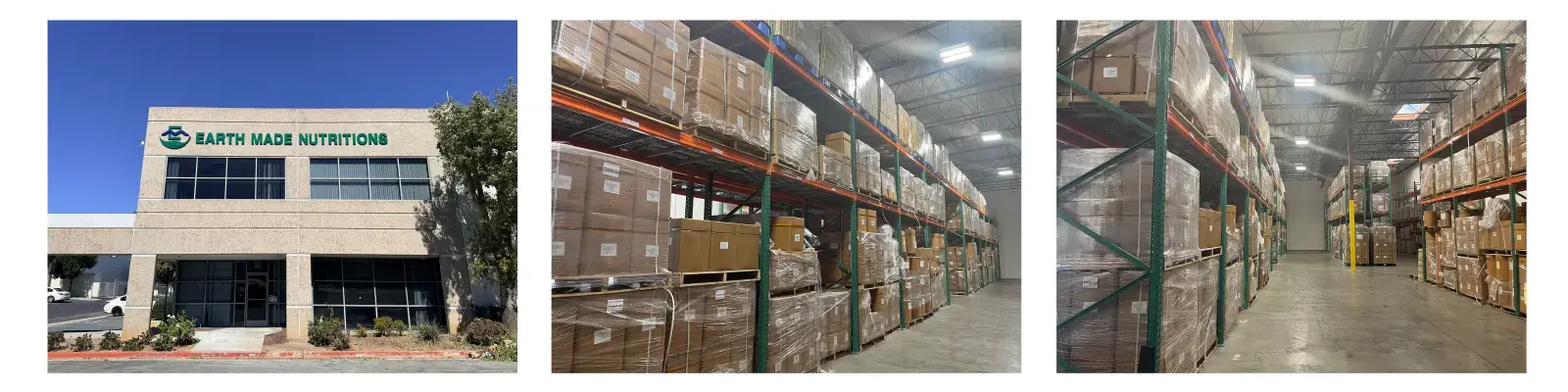
- U.S. Warehouse Access: Suppliers operating local warehouses in the United States eliminate import delays and reduce lead time uncertainty. This is particularly valuable for brands managing just-in-time production schedules.
Well-organized source paperwork, such as full COAs, stability data, and regulatory compliance letters, shows that operations are mature and makes the job of your QA team easier.
How to Use ACV Fruit Powder in Supplement Formulations
Because water is used as the solvent throughout the whole production process, this component is able to be compatible with clean labelling throughout the manufacturing process. Due to the fact that it is brownish-yellow in colour, it is easy to include in amber capsules, tan pill matrices, and earthy-toned powder blends. This avoids the need for masking agents.
Recommended Applications and Dosage Guidelines
- Supplements that are encapsulated: Hard-shell capsules are an excellent medium for higher assay powders that include 10% total acids. Combining with a flow agent like silicon dioxide helps to fight the hygroscopic tendency and guarantees that fill weights are uniform throughout the process.
- Gummies with functional properties: the powder form prevents acid from interfering with the structures of pectin or gelatin gel! It is possible to achieve standard inclusion rates of 500–1,000 mg per serving without impairing the texture of the edible product.
- Dry Beverage Mixes: Because apple cider vinegar powder dissolves so quickly in water, it is an excellent choice for developing immediate detox mixes and electrolyte formulations. During the pilot testing phase, it is important to verify the dispersibility in cold water.
Additionally, batch-level testing is still required for all forms in order to demonstrate shelf-life claims and maintain the integrity of the label. This testing involves determining whether or not the product is stable under varying levels of humidity and temperature.

Conclusion
To find a good apple cider vinegar fruit powder provider, you need to carefully look at their acidity specifications, level of certification, supplier infrastructure, and the clarity of their paperwork.
FAQ
1. What is the difference between 5% and 10% total acids specification?
The 5% specification suits food-grade and flavored applications where palatability matters. The 10% specification delivers a higher concentration of active acids per gram, making it the preferred choice for encapsulated dietary supplements where precise dosing is the priority.
2. How should bulk ACV powder be stored?
Store below 25°C at relative humidity under 60%. ACV powder is hygroscopic—exposure to moisture causes caking and compromises product integrity. Double PE-lined drums with desiccant inserts are the industry standard for bulk packaging.
3. Can I label my finished product as organic?
Only if your ACV powder holds certified organic status, including an organic-certified carrier. Standard powders using conventional maltodextrin are not eligible for organic labeling under USDA NOP guidelines.
4. How do I verify authenticity and rule out adulteration?
Request HPLC data showing the full organic acid profile, not just titration results. C13 Isotope Ratio Mass Spectrometry (IRMS) is the gold standard for detecting petroleum-derived acetic acid substitution in premium ingredient programs.
Partner with EM for Certified Apple Cider Vinegar Fruit Powder
Earth Made Nutritions Inc. has NSF GMP, ISO, FSSC22000, Kosher, Halal, and Organic certifications for its apple cider vinegar fruit powder, which comes in 5% and 10% total acid specifications. With four warehouses in the U.S., in-stock items, free samples, and second-day pickup, you can keep your formulation schedules on track. You can email our team at info@em-herb.com to place an order for a sample or ask for a COA.
References
1. Johnston, C.S., & Gaas, C.A. (2006). Vinegar: Medicinal Uses and Antiglycemic Effect. MedGenMed: Medscape General Medicine.
2. Budak, N.H., et al. (2014). Functional Properties of Vinegar. Journal of Food Science.
3. Shishehbor, F., et al. (2017). Acetic Acid Supplementation and Metabolic Parameters. Journal of Functional Foods.
4. Yagnik, D., et al. (2018). Antimicrobial Activity of Apple Cider Vinegar against E. coli, S. aureus, and Candida albicans. Scientific Reports.
5. United States Pharmacopeia (USP). (2022). Dietary Supplement Ingredient Standards and Quality Control Guidelines. USP.
6. Grand View Research. (2023). Apple Cider Vinegar Market Size, Share & Trends Analysis Report. Grand View Research.