- English
- French
- German
- Portuguese
- Spanish
- Russian
- Japanese
- Korean
- Arabic
- Irish
- Greek
- Turkish
- Italian
- Danish
- Romanian
- Indonesian
- Czech
- Afrikaans
- Swedish
- Polish
- Basque
- Catalan
- Esperanto
- Hindi
- Lao
- Albanian
- Amharic
- Armenian
- Azerbaijani
- Belarusian
- Bengali
- Bosnian
- Bulgarian
- Cebuano
- Chichewa
- Corsican
- Croatian
- Dutch
- Estonian
- Filipino
- Finnish
- Frisian
- Galician
- Georgian
- Gujarati
- Haitian
- Hausa
- Hawaiian
- Hebrew
- Hmong
- Hungarian
- Icelandic
- Igbo
- Javanese
- Kannada
- Kazakh
- Khmer
- Kurdish
- Kyrgyz
- Latin
- Latvian
- Lithuanian
- Luxembou..
- Macedonian
- Malagasy
- Malay
- Malayalam
- Maltese
- Maori
- Marathi
- Mongolian
- Burmese
- Nepali
- Norwegian
- Pashto
- Persian
- Punjabi
- Serbian
- Sesotho
- Sinhala
- Slovak
- Slovenian
- Somali
- Samoan
- Scots Gaelic
- Shona
- Sindhi
- Sundanese
- Swahili
- Tajik
- Tamil
- Telugu
- Thai
- Ukrainian
- Urdu
- Uzbek
- Vietnamese
- Welsh
- Xhosa
- Yiddish
- Yoruba
- Zulu
When sourcing botanical ingredients at scale, a label carries far more weight than most buyers initially realize. Standardized tongkat ali root powder — derived from Eurycoma longifolia Jack — is one of the most sought-after functional ingredients in today's nutraceutical, sports nutrition, and functional food markets. But not every label tells the same story. Understanding what each term, percentage, and certification mark actually signals is the difference between a procurement win and a costly mismatch. This guide breaks it all down plainly.
Understanding Standardized Tongkat Ali Root Powder Labels
The word "standardized" is not there for looks. It comes with a clear technical promise: the finished powder has a known, steady amount of a certain bioactive compound. The standard compound for Eurycoma longifolia extract is eurycomanone, a quassinoid that is known as the best way to show how strong something is.
What "Standardized" Actually Guarantees
A sticker that says ">1% Eurycomanone" or ">2% Eurycomanone" lets a formulation manager know that every batch has the same amount of active ingredient, which has been proven by HPLC analysis. This can't be said about raw root powder that hasn't been standardized. Variability from batch to batch is a problem for formulations, especially for companies that make capsules and tablets and need to make sure that doses are always the same.
Decoding Extract Ratios and Origin Claims
When you write "100:1" next to an extract ratio, it means that 100 kg of root material makes 1 kg of extract. These numbers show how hard it is to concentrate, not how powerful something is. A 200:1 number doesn't mean anything in the real world unless it is paired with a standard busy percentage. Labeling of origin is just as important. Many people think that Eurycoma longifolia root from Malaysia is the best because it grows naturally there, and trustworthy sellers put the location of their farms right on their paperwork.
Certifications That Carry Real Weight
This is what you should look for: ISO, NSF GMP, FSSC 22000, Kosher, Halal, and Organic certifications. These aren't just fancy marketing tricks; they're audited quality system validations that make it easier to get goods through customs and get them approved by regulators in the US, EU, and Asian markets.

Key Factors Behind Label Variations and Their Implications
Label differences between suppliers of tongkat ali root powder are often signs of bigger differences in how they source materials, how they process them, and how they handle quality. Understanding these signs keeps buying teams from making mistakes that cost a lot of money.
These are the main factors that cause label differences that matter:
- Active compound percentage: A label specifying ">0.8% Quassinoids" is a verifiable quality claim. Generic labels listing only "Tongkat Ali Extract" with no active percentage offer no procurement-grade transparency. Always prioritize labeled standardization over vague descriptor claims.
- Root powder versus extract powder: Pure root powder is cellulose-heavy with lower active density, requiring gram-level dosing for effect. Extract powder concentrates the bioactives, allowing effective clinical dosages between 200 mg and 400 mg — a critical distinction for capsule manufacturers working with strict fill weight tolerances.
- "Organic" and "wildcrafted" claims: Organic certification requires documented soil and farming compliance. "Wildcrafted" indicates forest-harvested material — valuable for natural positioning, but only credible when paired with traceability documentation and a COA.
All of these label signs show how seriously a seller takes quality control. A cheap choice with unclear labels usually means that the extraction infrastructure isn't well developed, the raw materials aren't always coming from the same place, or there isn't any third-party proof. All of these things put downstream makers at risk when it comes to formulation.
How to Use Label Information to Choose the Right Product
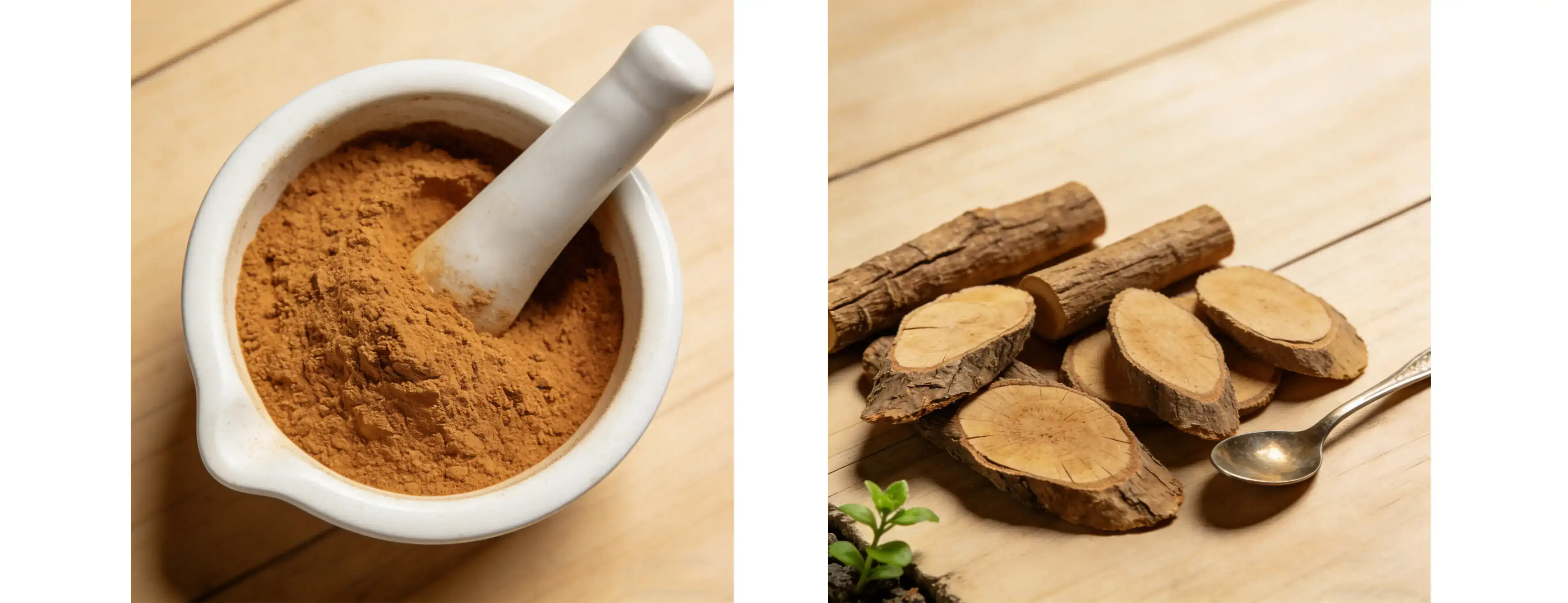
To match label data to your real buying needs, you need to make sure that the right standard is used for the right application. The brownish-yellow color of good Eurycoma longifolia root powder is a sign that it was processed correctly; powder that is too light or too dark is generally a sign of contamination or bad drying.
Matching Specification to Application
For sports nutrition pre-workout blends to mix well in cold water, the particles need to be small (usually 80 mesh). For beverage uses, you need extracts that dissolve in water and are proven to be stable at high temperatures. Quassinoids stay active at normal heating temperatures, which makes them a good choice for functional coffee formats. To make sure their capsules work with automatic encapsulation lines, capsule makers need to know the bulk mass of the material, which is usually between 0.45 and 0.65 g/ml.
Organic vs. Non-Organic: What Labels Signal for Compliance
For US brands that want to position themselves as having clean labels, having an Organic certification on the label directly backs up marketing claims and makes it easier to show compliance. Non-organic sourcing isn't necessarily worse, but it needs more COA inspection to make sure there aren't any pesticide residues, especially when sending food to Europe and Japan, which have strict rules about what can be sold there.
It's important that label claims for tongkat ali root powder are backed up by science. A published study on Eurycoma longifolia shows that eurycomanone and glycosaponins help support the testosterone-to-cortisol ratio. This is a two-way benefit that works for both men's health supplements and sports performance recovery stacks.
Purchasing Standardized Tongkat Ali Root Powder: What Labels Tell You About Logistics and Supplier Services
Not only does a label show bioactive content, but it also shows operational reliability. That a seller has a recorded production and quality control chain, not just a spot-purchase model, can be seen by batch numbers, drum weight statements, and traceability codes.
Reading Packaging Details as a Procurement Signal
As long as the business packaging is 25 kg per drum, it meets industry minimum order quantities and helps with correct customs valuation. Labels with lot numbers, production and expiration dates, and storage conditions show that the seller can support a full recall or traceability check, which is something that all FDA-regulated makers in the US have to do.
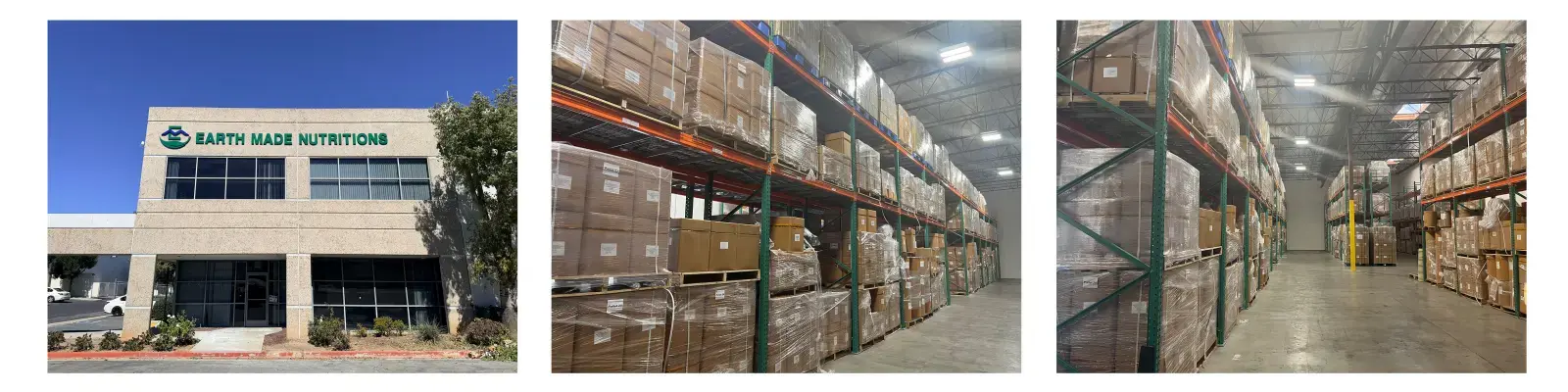
Long wait times aren't a problem when you work with suppliers whose warehouses are in the US. Earth Made Nutritions Inc. has four major local stores across the US. This means that in-stock items can be picked up the next business day, which is a practical benefit that directly cuts down on the time it takes for US-based buyers to make a purchase.
Maximizing Product Confidence: Safety Information on Labels
For responsible business-to-business purchasing, all product paperwork must clearly show information about safety and how to handle the product. Labels should say how to store the food (usually cool, dry, and out of direct light), how to handle it so it doesn't get wet, and how long it will last.
To follow the rules for importing, a full label package should have a COA with heavy metal panels (using ICP-MS), microbial testing results, and data on pesticide residues. When suppliers offer these documents along with standard labeling, it shows that their quality culture is mature. For entering the US market, a COA that doesn't include ICP-MS heavy metal data isn't complete. This is especially true for products that come from roots, which can pick up environmental pollutants as they are absorbed by the soil.
Correct and full labeling also speeds up the paperwork needed to enter the US and lowers the risk of FDA Import Alerts, which protects both the seller and the buyer's product launch schedule.
Conclusion
Reading the label on standardized tongkat ali root powder is a technical skill that has direct business effects. Active compound percentages, certification marks, origin claims, and package tracking codes all send a different message about how trustworthy the seller and the product are. When procurement teams learn how to read labels well, they can avoid expensive ingredient mismatches and build supply chains that can stand up to regulatory scrutiny. Being careful doesn't end with the label; it always starts with it.
FAQ
1. How do I verify that a label's active percentage claim is accurate?
Ask for a third-party COA that includes an HPLC study that proves the presence of eurycomanone. Suppliers with a good reputation include this paperwork with every batch. If you ask a seller for HPLC-verified batch data, they should give it to you.
2. What is the practical difference between root powder and extract powder?
Root powder keeps the whole plant structure, including cellulose, so bigger doses are needed to get the same effect. Extract powder takes out the plant parts that aren't needed and concentrates the bioactives. This lets smaller, more exact amounts be used, which is great for making capsules and drinks.
3. Is organic certification globally recognized for import purposes?
Many people in the US market know that you need to be certified as organic by the USDA. For products from the EU or Japan, there may be extra organic guidelines that are specific to those countries. Always check with your supplier about the scope of the certification before signing off on the final paperwork for the purchase.
4. Why does quality Tongkat Ali extract taste bitter?
The bitter taste comes from quassinoids, which are also the chemicals that give the ingredient its useful qualities. A sample that has been dissolved in water and tastes bitter is actually a good sign of quality. If there is no bitterness, it's likely because the active ingredient is low or fillers were added.
Source Your Tongkat Ali Root Powder Supplier With Confidence — Contact EM Today
Certified and standardized tongkat ali root powder (Eurycoma longifolia Jack) is sold by Earth Made Nutritions Inc. (EM) to functional food companies, sports nutrition companies, and nutraceutical brands all over the United States. EM has four warehouses in the US and has been certified by NSF GMP, FSSC 22000, ISO, Kosher, Halal, and Organic. They also have infrastructure that has been checked for quality. You can get free samples, but you have to order at least 25 kg/drum. You can email our team at info@em-herb.com to get price lists and detail sheets.
References
1. Tambi, M. I. B. M., Imran, M. K., & Henkel, R. R. — Asian Journal of Andrology, 2012.
2. Talbott, S. M., Talbott, J. A., George, A., & Pugh, M. — Journal of the International Society of Sports Nutrition, 2013.
3. Hamzah, S., & Yusof, A. — British Journal of Sports Medicine, 2003.
4. George, A., & Henkel, R. — Phytotherapy Research, 2014.
5. Low, B. S., Das, P. K., & Chan, K. L. — Journal of Ethnopharmacology, 2013.
6. Rehman, S. U., Choe, K., & Yoo, H. H. — Molecules, 2016.