- English
- French
- German
- Portuguese
- Spanish
- Russian
- Japanese
- Korean
- Arabic
- Irish
- Greek
- Turkish
- Italian
- Danish
- Romanian
- Indonesian
- Czech
- Afrikaans
- Swedish
- Polish
- Basque
- Catalan
- Esperanto
- Hindi
- Lao
- Albanian
- Amharic
- Armenian
- Azerbaijani
- Belarusian
- Bengali
- Bosnian
- Bulgarian
- Cebuano
- Chichewa
- Corsican
- Croatian
- Dutch
- Estonian
- Filipino
- Finnish
- Frisian
- Galician
- Georgian
- Gujarati
- Haitian
- Hausa
- Hawaiian
- Hebrew
- Hmong
- Hungarian
- Icelandic
- Igbo
- Javanese
- Kannada
- Kazakh
- Khmer
- Kurdish
- Kyrgyz
- Latin
- Latvian
- Lithuanian
- Luxembou..
- Macedonian
- Malagasy
- Malay
- Malayalam
- Maltese
- Maori
- Marathi
- Mongolian
- Burmese
- Nepali
- Norwegian
- Pashto
- Persian
- Punjabi
- Serbian
- Sesotho
- Sinhala
- Slovak
- Slovenian
- Somali
- Samoan
- Scots Gaelic
- Shona
- Sindhi
- Sundanese
- Swahili
- Tajik
- Tamil
- Telugu
- Thai
- Ukrainian
- Urdu
- Uzbek
- Vietnamese
- Welsh
- Xhosa
- Yiddish
- Yoruba
- Zulu
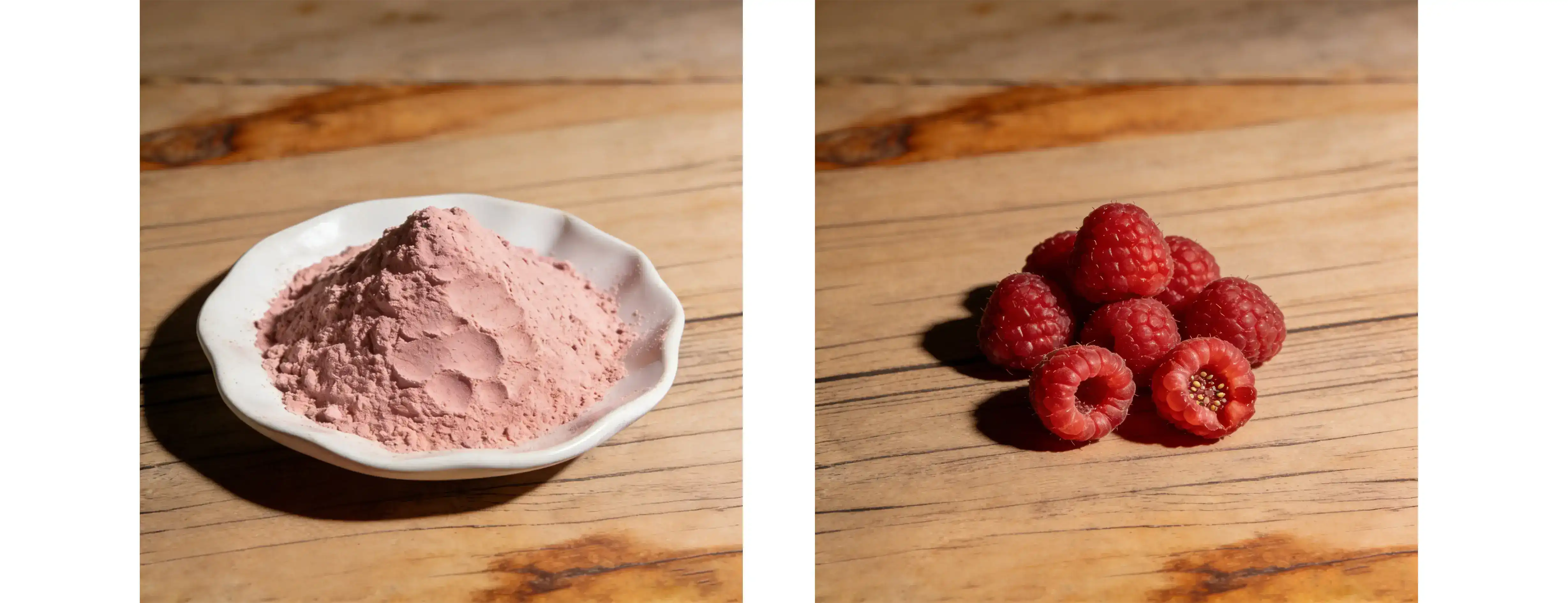
Raspberry Juice Powder is a concentrated, long-lasting ingredient made from the fruit of the Rubus idaeus L. tree by using modern methods to remove water. This fine pink powder tastes just like real raspberry jam and keeps the fruit's natural beneficial ingredients, like vitamin C, anthocyanins, and ellagic acid. Instead of liquid concentrates, which need to be shipped in a cold chain and can be unstable, this powder form gives procurement professionals a flexible option: consistent quality, longer shelf life, and easy integration into a wide range of formulations in the nutraceutical, functional food, cosmetic, and beverage industries.

What is Raspberry Juice Powder? Understanding Its Composition and Benefits
Raspberry Juice Powder is a smart ingredient option for makers who want to use real fruit flavor without the hassles of handling fresh fruit. The powder comes only from the fruit of the Rubus idaeus L. plant and is made by spray-drying or freeze-drying it in a way that keeps the medicinal and volatile aromatic chemicals. This method of processing gets rid of the water while focusing the natural sugars, organic acids, and phytonutrients into a solid, fluid form.
Core Nutritional Profile
The chemical makeup of the powder shows why buying teams are asking for it more and more in high-end formulas. Each batch has special polyphenols like ellagitannins as well as naturally occurring vitamin C, manganese, and nutritional fiber. Natural color that fits with clean-label efforts comes from the anthocyanin content, which gives the fruit its pink to purple color. These pigments change color depending on the pH level, going from red in acidic environments to blue-purple in neutral ones. Formulation scientists use this feature to make finished goods look good.
Functional Advantages for B2B Applications
The powder solves important problems in production that fresh or frozen strawberries can't. Its low moisture content (usually less than 5%) stops microbes from growing, so it can be stored at room temperature and doesn't need to be refrigerated during distribution. The standard makeup makes sure that the formula stays the same from batch to batch, which is a must for pharmaceutical and cosmetic uses where formula stability affects claims of effectiveness and regulatory compliance.
Processing techniques used in production keep the enzyme activity of helpful chemicals while getting rid of tough fibers that cause liquids to settle. This makes the powder very useful for companies that make drinks and need to make sure that the drinks dissolve completely without clouding or separating during storage. The particle size distribution, which is usually kept between 60 and 80 mesh, makes it easy for the particles to spread quickly in both hot and cold systems. This cuts down on processing time and makes production more efficient.

How to Use Raspberry Juice Powder in Your Products and Formulations
When buying, managers know about application factors, they can choose the right grades and make sure that all product lines are as cost-effective as possible. Depending on the needs of the industry and the placement of the final product, the powder can do anything from adding flavor to complex functional jobs.
Functional Beverage and Nutraceutical Integration
The powder does more than one thing at the same time in ready-to-drink mixes and quick beverage premixes. Raspberry Juice Powder hides metallic notes caused by adding minerals, adds natural acidity (pH 2.9–3.5 in solution) that makes flavors more interesting, and offers antioxidant support for health positioning. Based on the level of intensity you want, the recommended inclusion rates run from 0.5% to 3%. It is important to test for solubility to avoid settling or ring formation in bottled uses.
The powder is added to immune-support pills and superfood mixes by companies that make supplements. It makes green powders like spirulina and wheatgrass taste better. Natural fruit sugars balance out earthy notes without using fake sweeteners, which backs up claims of clean labels. The hygroscopic powder is kept from absorbing water by encapsulation technologies, which makes the pill and capsule forms more stable.
Cosmetic and Personal Care Applications
Cosmetic scientists like the powder because it has antioxidants that can be used in anti-aging serums, face masks, and body care products. The ellagic acid content improves the look of skin by fighting free radicals, and the natural acidity helps keep the pH level of products balanced. The usual amount used in produced goods is between 0.1% and 1%, but the water action needs to be closely watched to keep microbes from getting into the product. The fine particle structure makes it possible for cream and lotion bases to have a smooth texture without the gritty feel that bigger particle sizes might add.
Food Manufacturing and Bakery Systems
The powder works well in low-moisture areas where liquid juice would break down the texture, which is useful for candy uses. It is used in glazes, meringues, and dry mixes in bakeries, and it is added to ganaches and sauces by chocolate makers. If the powder is spread out correctly, it can survive baking temperatures. However, long-term contact with heat above 180°C may damage the anthocyanin pigments. Adding things in a controlled way during cold stages of processing keeps the color and aromatic chemicals intact.
After opening, storage procedures are very important for keeping quality. We suggest that you seal packages again right away after using them and keep the relative humidity in storage areas below 50%. Powder that is kept in aluminized foil and out of direct light for 24 months from the date it was made will keep its organoleptic features.

Comparing Raspberry Juice Powder with Alternative Raspberry Products
When making buying choices, it's helpful to know how Raspberry Juice Powder stacks up against other raspberry ingredient formats. Each form has its own pros and cons that affect how well it works in different business situations and market positioning strategies.
Fresh strawberries are the most delicious, but they put a lot of stress on the supply line. Prices change seasonally because of supply, and the product has a shelf life of only one to three days, which requires just-in-time transportation and processing right away. Usually, between 15 and 25 percent of the food goes bad between the farm and the center, which takes away any cost benefits. Quality differences between harvests make standardization more difficult because formulas have to be changed all the time to keep end product profiles uniform.
Raspberry products have a lot of bioactive substances, but they don't have all the flavors that raspberries do. When raspberries are extracted using solvents, the volatile aromatics that give them their real flavor are taken away, leaving only tannins and colors. Extracts work great for tasks that need to standardize certain compounds, like making 40% ellagic acid for supplements, but they can't give food and drinks the real taste that people expect. Raspberry Juice Powder usually costs three to five times less per kilogram for the same amount of taste.
The closest thing that can be used instead of spray-dried Raspberry Juice Powder is freeze-dried raspberry powder. The sublimation process keeps more nutrients that are sensitive to heat and gives you more fruit solids per gram (95% fruit on average vs. 70% for spray-dried with maltodextrin carrier). However, freeze-dried grades are more expensive—sometimes twice as much as spray-dried equivalents—and don't dissolve as well in cold environments. When compared to spray-drying, the amount of freeze-dried material that can be made is still restricted, which could cause supply problems during times of high demand. The choice of format relies on the positioning strategy: Raspberry Juice Powder is best for standard goods because it balances cost and performance, while freeze-dried material supports "premium natural" claims.
How to Choose the Best Raspberry Juice Powder Supplier: A Procurement Guide
Choosing the right supplier affects the long-term success of the product and the security of the supply chain. When procurement teams get price quotes, they also have to look at things like technical skills, quality systems, and operating flexibility, all of which affect the total cost of ownership of Raspberry Juice Powder.
Certification and Compliance Verification
Reliable providers keep their certifications up to date, which shows that they follow well-known quality standards. NSF GMP approval proves that pharmaceutical-grade production practices are used, along with proven ways to clean and prevent contamination. The FSSC 22000 certification covers managing food safety by looking at risks and putting in place rules to stop them. Kosher and Halal certifications make it easier for products aimed at certain groups of people to reach new customers. Organic certification, on the other hand, makes sure that products can be tracked from the farm to the processing plant without leaving behind any manmade pesticide leftovers.
When you look over the paperwork, you should include a Certificate of Analysis for each lot. This should list the moisture content, solubility, bacterial testing results, and heavy metal screens. The quality control of suppliers who use ICP-MS analysis to find heavy metals is better than that of suppliers who use less sensitive methods. Multi-residue panels that meet EU and USDA guidelines should be used for pesticide residue tests. This is especially important for organic claims where tolerance levels are very close to zero.
Manufacturing Capability and Scalability
When a business grows or demand changes with the seasons, production capacity has a direct effect on how reliable the supply chain is. Cross-contamination risks are lower at suppliers with separate raspberry processing lines than at places with shared equipment. Spray-drying equipment's capacity, which is given in kilograms per hour, shows how quickly big requests can be filled. Earth Made Nutritions Inc. keeps up-to-date extraction and drying systems that can handle orders ranging from our minimum 25 kg amount to multi-ton needs. Strategic inventory placement shortens shipping times even more.
The ability to provide technical help is what sets strategic partners apart from commodity providers. Having access to formulation scientists who understand the problems that come up in specific applications speeds up the process of making new products. Suppliers who let you change spray-drying factors like carrier ratios, input temperatures, or atomization settings make it possible to optimize the formula for a particular end use. Private labeling services and custom packaging setups help brands stand out without having to buy new package lines.
Logistics and Inventory Management
Having domestic warehouse infrastructure gets rid of delays in foreign shipping and makes following the rules easier. Our four carefully placed U.S. warehouses allow us to pick up orders the next day and send them the next day to most places in the entire U.S. This supports just-in-time inventory tactics that lower the need for working capital. Standard packing in 25 kg fiber drums makes it easy to handle while also keeping moisture out. Bulk totes are for high-volume users who want to reduce the amount of packaging trash they create.
Minimum order numbers show how efficiently a business works. Our 25 kg MOQ makes it easy for new brands to get our products, while our bulk options help well-known names. Cost modeling can be done accurately when pricing systems are clear and take into account different levels of volume, payment terms, and freight choices. Free samples, which are a sign of a trustworthy provider, allow for testing on a smaller scale before making a full commitment, which lowers the risk of the recipe.

Top Trends and Future Outlook for Raspberry Juice Powder in Global Markets
The market is moving more and more toward natural ingredients that meet customer needs for clarity and usefulness. Raspberry Juice Powder fits well with a number of related trends that are changing how companies across all fields buy ingredients.
Clean Label Movement Acceleration
As consumers become more careful about reading ingredient lists, foods are being reformulated to avoid using fake colors, tastes, and preservatives. Raspberry Juice Powder satisfies this need by substituting natural Red 40 colorant for taste and removing the need for additional flavoring agents. The label that says "Raspberry Juice Powder" is easy to read on panels that people will see, which backs up marketing claims about natural ingredients. When brands get to a clean-label situation, they can charge 15–30% more, which means that investing in ingredients is a good business move.
Functional Food and Beverage Expansion
One of the fastest-growing areas of food shopping is functional beverages, which include collagen drinks, nootropic blends, and recipes that boost the immune system. These goods need ingredients that are both useful and tasty. Raspberry powder's antioxidant profile and taste-masking features work well together in formulations. Market study shows that people are ready to pay more for products that offer real health benefits and fun ways to use them. This means that there is a bigger market for expensive Raspberry Juice Powder.
Processing Technology Innovations
New developments in packaging technologies promise that hygroscopic fruit powders will be more stable. Microencapsulation with modified starches or gum arabic makes walls that stop wetness from absorbing, which could make the product last longer and be easier to handle. New drying methods, such as refractance window drying and pulse combustion drying, say they can keep more nutrients than traditional spray drying, but they are still not ready for industrial use. Purchasing managers who keep an eye on these technologies can find early adopters who can give unique goods as the methods get better.
As brands react to pressure from stakeholders to be more environmentally responsible, sustainability factors are becoming more and more important in buying decisions. Suppliers that show they care about sustainable buying by working directly with farmers, getting organic approval, and starting programs to cut down on waste are in line with corporate social responsibility goals. Our idea of sustainable development puts environmental responsibility first at all stages of production, from using water recycling systems to using green energy, which helps customers meet their sustainability reporting requirements.
Conclusion
Raspberry Juice Powder has a real fruit taste and a lot of nutrients in a form that is designed to meet the needs of modern production. Its stability, solubility, and ability to be used in a wide range of situations make it essential for product makers who want to place their products in a way that is good for the environment and works well. To do good buying, you need to look at all of a supplier's credentials, including their professional skills, certifications, and organizational infrastructure, as well as their prices. As people continue to prefer natural products that come from clear sources, businesses that build relationships with quality-focused providers can take advantage of the market's steady growth while keeping formulation integrity and following the rules.
Frequently Asked Questions
1. Why does the powder sometimes clump during storage?
Raspberry Juice Powder is very hygroscopic, which means it easily soaks up water from the air, because it contains a lot of natural fruit sugar. When particles are exposed to humidity levels above 50%, they soak up water and stick together. For proper storage, items need to be wrapped in aluminum foil and put in climate-controlled settings with desiccant packets. Once containers are opened, they should be resealed right away and used within the time limits given to avoid caking, which makes it harder to mix and move.
2. How does spray-dried powder differ from freeze-dried versions?
Spray-drying uses heat and transports substances like maltodextrin to make powder that dissolves easily in cold water and is perfect for quick drinks. There are more products made, and the method costs less. Freeze-drying gets rid of water through condensation instead of heat, so more heat-sensitive nutrients are kept, and the fruit content is almost completely pure. However, freeze-dried powder is much more expensive, doesn't dissolve as well, and is harder to get. For most business uses that prioritize cost-performance balance, Raspberry Juice Powder is better.
3. Can this powder replace liquid raspberry concentrate directly?
Because the concentrations are different, direct weight-for-weight replacement does not work. Fruit solids are usually concentrated 6–10 times more in Raspberry Juice Powder than in single-strength juice. Reconstitution ratios of about 1:7 to 1:9 (powder to water) recover qualities that are similar to juice, but exact ratios need to be tested based on the needs of the formulation and the level of taste intensity that is wanted. Before going from bench-scale tests to mass production, formulation scientists should find the best replacement rates.
Partner with EM for Premium Raspberry Juice Powder Supply
Since 2018, Earth Made Nutritions Inc. has been making natural ingredients. They do this in modern buildings in California that use cutting-edge technologies for extraction and spray-drying. Our Raspberry Juice Powder source can do more than just provide goods; they can also work with us to build long-term relationships. They have a lot of certifications, such as NSF GMP, FSSC22000, Kosher, Halal, ISO, and Organic qualifications. These certifications show that we are dedicated to high standards that meet the strictest legal requirements in places around the world.
Some of the most common problems in buying are directly addressed by our operational benefits. Four carefully placed U.S. stores make it possible to quickly fill orders—in-stock items ship within 48 hours—replacing the longer lead times that come with buying from other countries. Our minimum orders are as low as 25 kg, which enables us to work with new names and high-volume makers. We offer free samples so that you can try your formulations without any risk before making a business promise.
Our R&D team provides technical support to help with problems that are specific to an application, such as improving solubility or setting up stable testing methods. Our philosophy of sustainable growth guarantees operations that are good for the earth and help you reach your business responsibility goals. Get in touch with info@em-herb.com right away to talk about your Raspberry Juice Powder needs and get prices that are tailored to your unique purpose.
References
1. Beekwilder J, Hall RD, de Vos CHR. "Identification and Dietary Relevance of Antioxidants from Raspberry." BioFactors, 2005, 23(4): 197-205.
2. Pantelidis GE, Vasilakakis M, Manganaris GA, Diamantidis G. "Antioxidant Capacity, Phenol, Anthocyanin and Ascorbic Acid Contents in Raspberries, Blackberries, Red Currants, Gooseberries and Cornelian Cherries." Food Chemistry, 2007, 102(3): 777-783.
3. Mullen W, McGinn J, Lean MEJ, MacLean MR, Gardner P, Duthie GG, Yokota T, Crozier A. "Ellagitannins, Flavonoids, and Other Phenolics in Red Raspberries and Their Contribution to Antioxidant Capacity." Journal of Agricultural and Food Chemistry, 2002, 50(20): 5191-5196.
4. Bobinaitė R, Viškelis P, Venskutonis PR. "Variation of Total Phenolics, Anthocyanins, Ellagic Acid and Radical Scavenging Capacity in Various Raspberry Cultivars." Food Chemistry, 2012, 132(3): 1495-1501.
5. Hager TJ, Howard LR, Prior RL. "Processing and Storage Effects on Monomeric Anthocyanins, Percent Polymeric Color, and Antioxidant Capacity of Processed Black Raspberry Products." Journal of Food Science, 2008, 73(6): H134-H140.
6. Mazur SP, Nes A, Wold AB, Remberg SF, Aaby K. "Quality and Chemical Composition of Ten Red Raspberry Varieties During Storage." Food Chemistry, 2014, 160: 346-352.